
Don’t Board That Plane Without Reading This First
With the travel season upon us, most people are busy planning trips — flights, hotels, itineraries. Vaccines? Usually an afterthought, if they’re thought of at all.
But the reality is that traveling internationally exposes your immune system to diseases it has never encountered before. And unlike a delayed flight or a lost bag, getting seriously ill abroad can have real, lasting consequences.
Here’s what every traveler should know before they go.
Diseases like typhoid, hepatitis A, and yellow fever are common in parts of the world where the food, water, and mosquito exposure are simply different from what your body is used to. You can’t see or taste contamination in a meal. You won’t know a mosquito carrying a dangerous virus from any other mosquito.
This is exactly why travel vaccines exist — not to scare you out of traveling, but to let you travel confidently.
Every destination is different, but these come up most often:
Hepatitis A Spread through contaminated food and water, hepatitis A is one of the most common vaccine-preventable infections acquired during travel. It can cause weeks of fatigue, nausea, and liver inflammation — and you can be infected without knowing it until you’re already back home. Recommended for most international destinations outside of Canada, Western Europe, Japan, and Australia.
Typhoid A bacterial infection also spread through contaminated food and water. The CDC recommends it for travelers to South Asia (including India, Pakistan, and Bangladesh), Latin America, Africa, and anywhere with limited access to clean water or sanitation.
Yellow Fever This one can stop you at the border. Many countries in sub-Saharan Africa and tropical South America either require proof of yellow fever vaccination for entry or strongly recommend it. The required proof is an official document called the International Certificate of Vaccination — and only authorized clinics can issue it. No other vaccine can substitute.
Hepatitis B Spread through blood or bodily fluids. Relevant for longer trips, adventure travel, or any situation where you might need medical care abroad.
Other vaccines to discuss with your provider Depending on your destination and activities, you may also need to talk about Japanese encephalitis, meningitis, rabies pre-exposure prophylaxis, or malaria prevention medication.
Before focusing on destination-specific vaccines, the CDC says every traveler should first make sure their routine vaccinations are current. Many adults are unknowingly behind. These include:
This is the part most people get wrong.
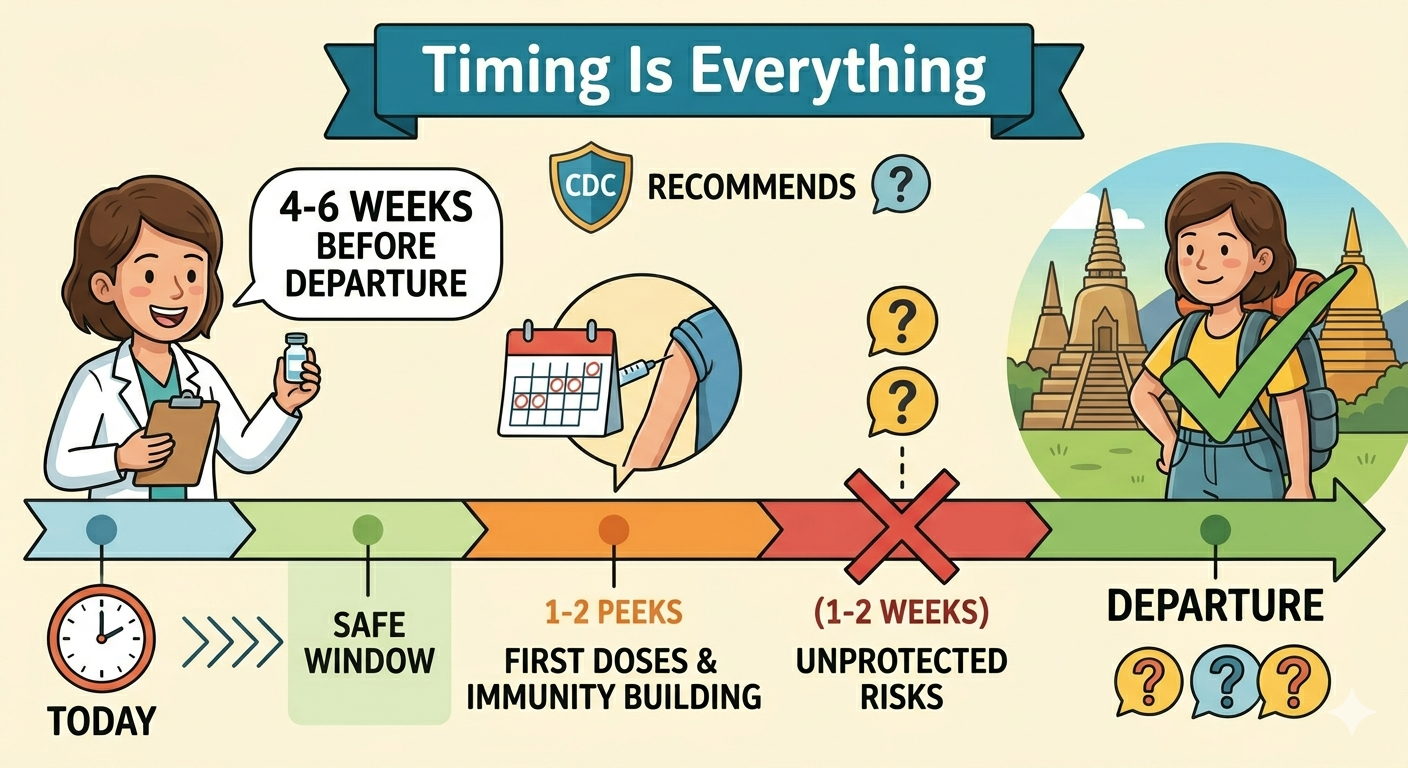
The CDC recommends seeing a travel health provider at least 4 to 6 weeks before departure. Here’s why:
Research published in the Journal of Travel Medicine found that among last-minute travelers, 18% had to skip at least one recommended vaccine simply because there wasn’t enough time before departure. Don’t let a packed schedule be the reason you travel unprotected.
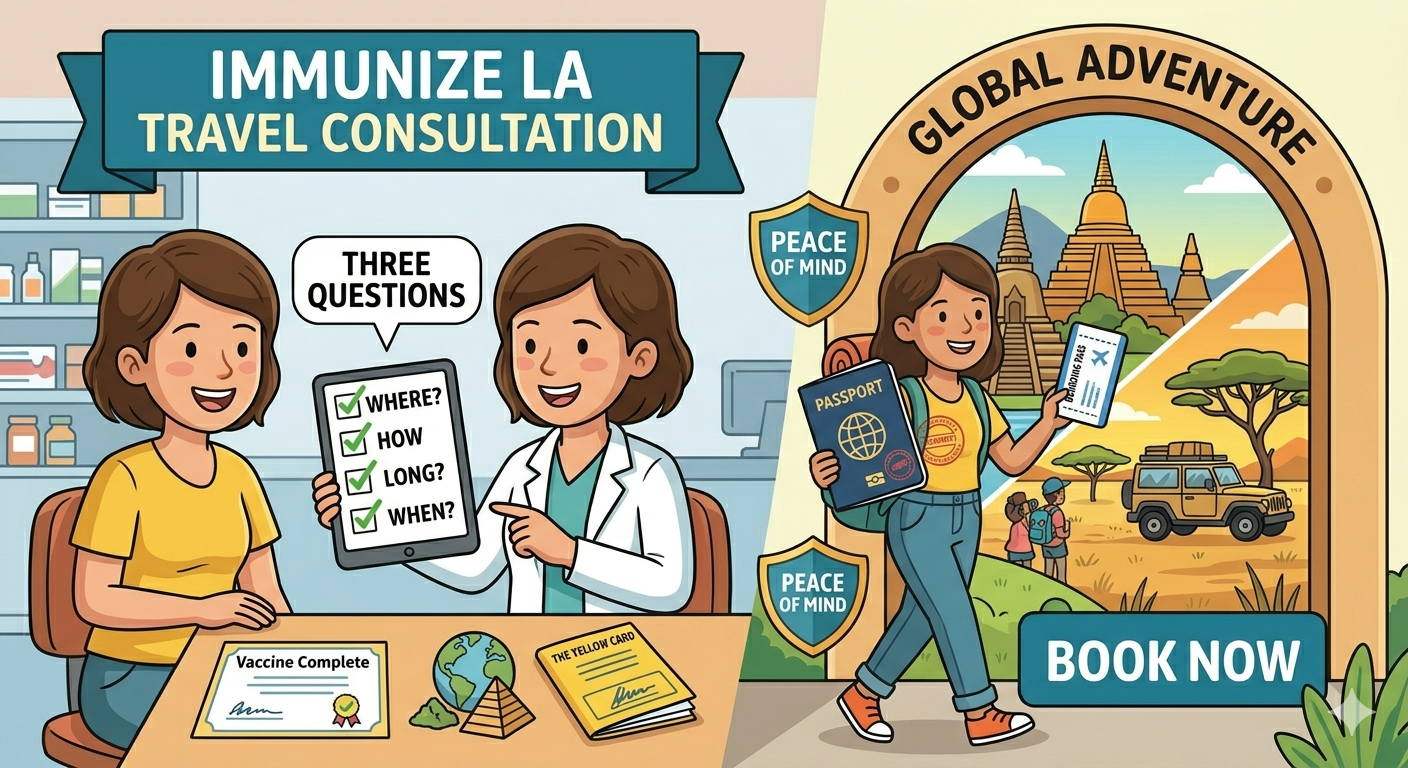
Before any international trip, ask yourself three questions:
The answers will tell you and your provider everything needed to protect you properly.
At Immunize LA, our pharmacists at Olympia Plaza Pharmacy offer personalized travel health consultations. We’ll review your destination, your health history, and make sure you leave with everything you need — vaccines, documentation, and peace of mind.