
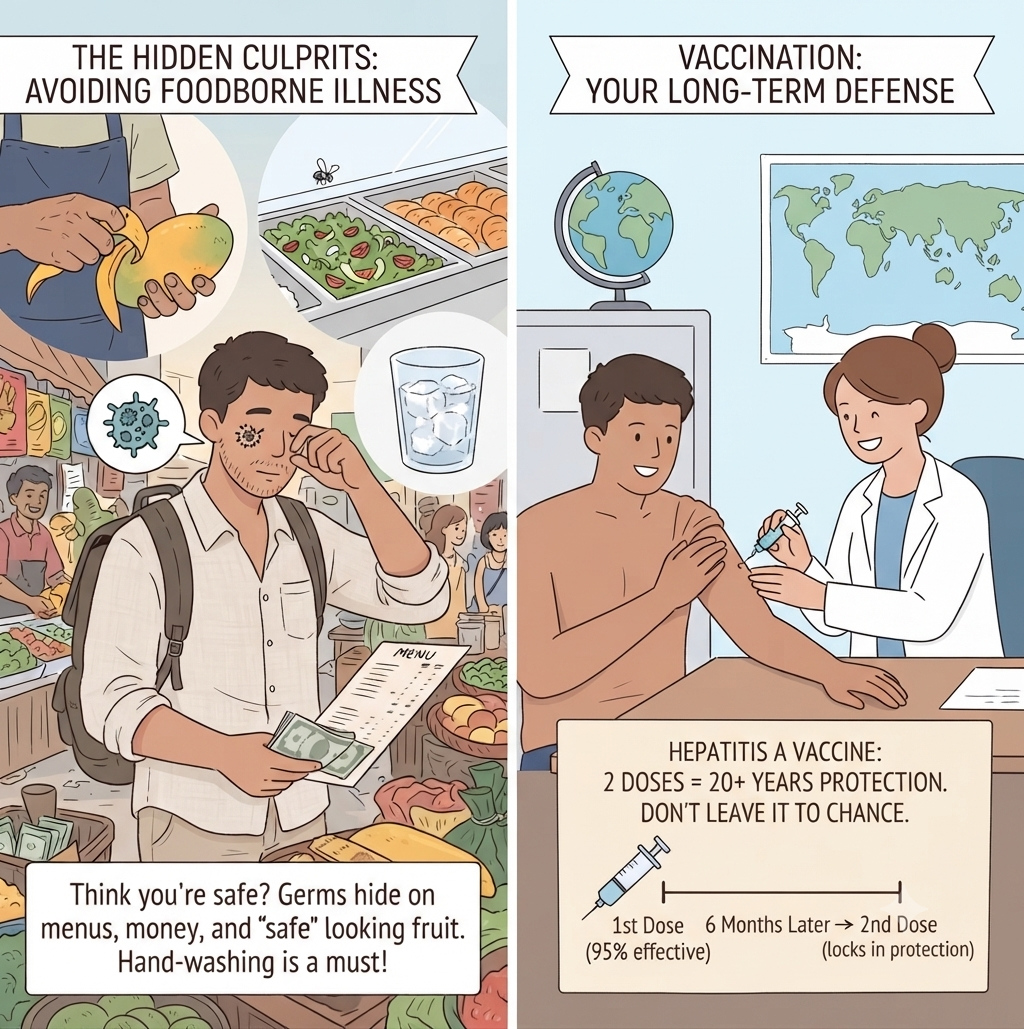
Jordan considered himself careful. He didn’t drink the tap water, he skipped the street ice, he even brought his own hand sanitizer. Three days into his trip through Southeast Asia, he was doubled over in a hotel bathroom anyway, and spent the rest of the week rationing bland rice and running to the toilet between excursions.
What he’d missed wasn’t dramatic. It was small, boring, and easy to overlook: he was washing his hands before meals, like everyone tells you to, but not before touching his face, not after handling menus and money at markets, and not after using public restrooms that didn’t have soap. He was also eating fruit that had been peeled by someone else’s unwashed hands, and vegetables that looked cooked but had been rinsed in tap water before hitting the pan.
Foodborne illness while traveling almost never comes from one dramatic mistake. It comes from a dozen small moments most people don’t think to flag as risky, because they don’t look risky. A salad bar. A fruit cup at a hotel breakfast. A glass of water with ice that came from a source nobody checked. None of it announces itself the way a “don’t drink this” sign would.
The basics still matter and they’re worth repeating: wash produce yourself when you can, avoid raw vegetables and fruit you can’t peel yourself, skip ice unless you know it’s made from purified water, and treat street food stalls with high turnover (meaning the food is actually hot and freshly cooked) as safer than ones with food sitting out.
Hand-washing matters everywhere, not just at the table. Public transit, market stalls, ATMs, door handles at restaurants. That’s where a lot of exposure actually happens, well before food ever reaches your mouth.
Vaccination adds another real layer here, especially for hepatitis A, which spreads through exactly this kind of contaminated food and water. A single dose is already about 95% effective, according to CDC data, but that protection starts to fade over time on its own. A second dose, given six months later, is what locks in protection for 20 to 40 years instead of leaving it to wear off. It’s not about needing two shots to “work.” It’s about the second one making the first one last.
If foodborne illness has ever derailed a trip for you, or you just want to actually avoid it on the next one, this is worth a real conversation before you fly, not a mental checklist you half-remember at the airport.
Don’t let a bad meal wreck your trip. Call (323) 937-2590 or book your travel consultation and we’ll walk you through both the precautions and the vaccine.